
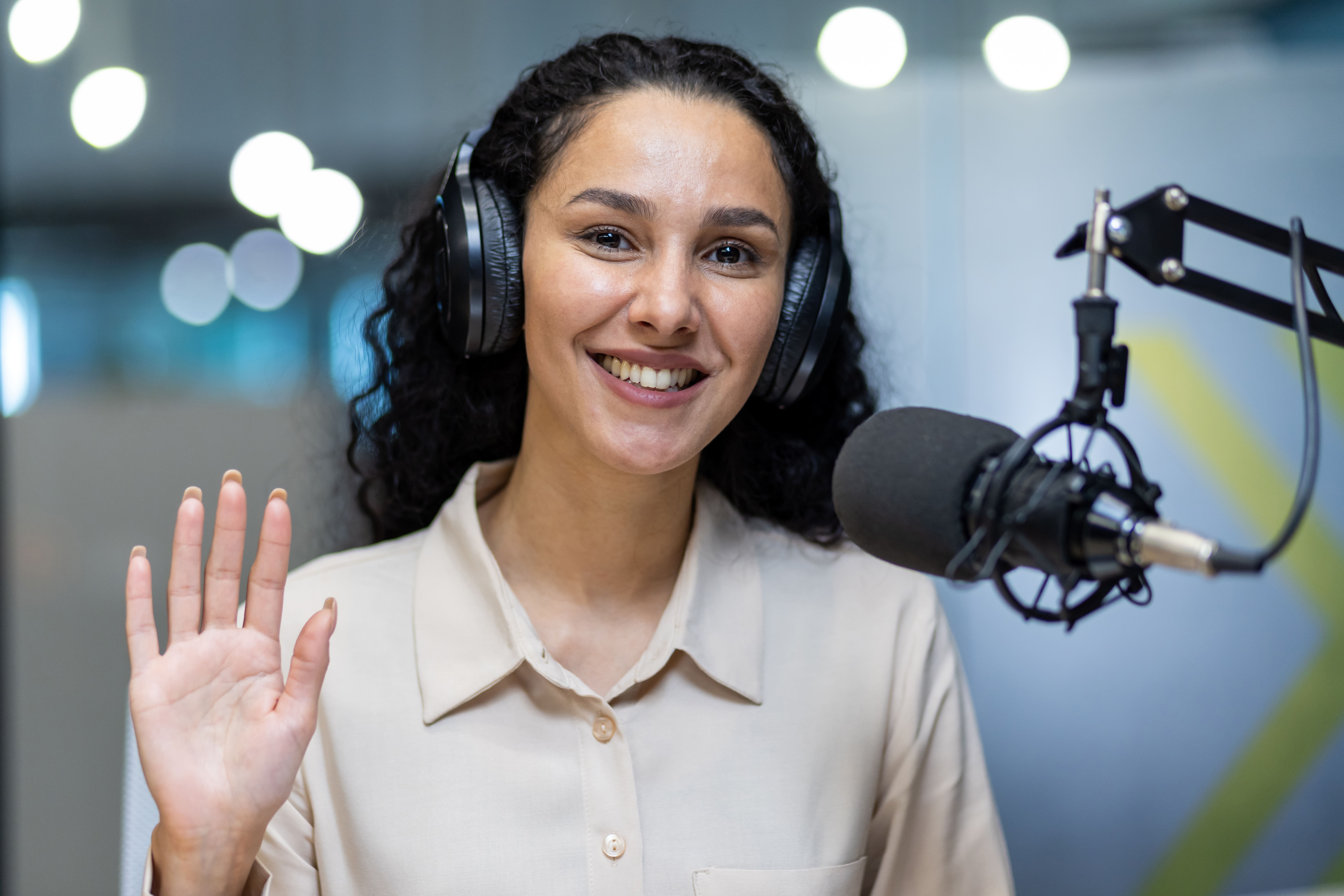
Voice-Based AI Interview Practice: Complete Guide
Practice interviews out loud with adaptive voice-based AI. Get instant feedback on pacing, filler words, STAR structure and confidence built for real hiring rounds.
Voice-Based AI Interview Practice: The Complete Guide to Practicing Out Loud
The Short Version
Voice-based AI interview practice lets you speak your answers out loud to a conversational AI that listens, asks follow-ups, and grades how you sound not just what you write. It exposes the gap between knowing an answer and delivering it: pacing, filler words, structure, confidence, and clarity. The candidates who use voice prep enter real interviews already comfortable hearing themselves talk under pressure which is exactly when most people freeze. MockWin's real-time AI interview runs the entire round by voice, then breaks down every metric that matters.
What You'll Learn
- What voice-based AI interview practice actually is
- Why speaking your answers beats reading them in your head
- The science: pacing, filler words, and the 150 wpm sweet spot
- How voice-based AI mock interviews actually work
- What a great voice AI session measures about you
- The biggest delivery mistakes voice AI helps you fix
- Voice practice for behavioral, technical, and case interviews
- How to get the most out of MockWin's voice practice
- Voice vs. video vs. text-based interview practice
- FAQ
What Voice-Based AI Interview Practice Actually Is
Voice-based AI interview practice is exactly what it sounds like and that's the point. Instead of reading sample questions and writing answers in a doc, you put on a headset, click start, and an AI interviewer asks you a question out loud. You answer out loud. It listens, transcribes, follows up, probes weak spots, and at the end gives you a structured breakdown of how you actually sounded.
This is fundamentally different from the chat-style "AI interview prep" most candidates default to. A chat thread can tell you a good answer. It can't tell you that you said "um" eleven times, sped up the moment a hard question landed, or trailed off mid-story without ever naming the outcome. A voice-first adaptive AI interviewer hears all of that and corrects it before it costs you the offer.
The shift is also a market shift, not a niche preference. Around 70% of job seekers now use generative AI to research roles and prepare answers, and the next wave is clearly conversational: candidates want an interviewer who talks back, not a textbox that grades them.

Why Speaking Your Answers Beats Reading Them in Your Head
If you've ever walked out of an interview thinking "I knew that why did it come out like that?" that gap is the entire reason voice-based practice exists. Knowing an answer and delivering an answer use different parts of your brain. One is recall. The other is real-time language production under cognitive load. The only way to train the second one is to actually do it.
When you only practice in writing, you reorder sentences, delete weak words, and pause to think none of which you can do live. Your future interviewer will hear the first version of every sentence, not the third. Voice practice trains that first version.
There's also a feedback problem with traditional prep. Practicing with a friend feels productive, but friends are biased and rarely catch micro-issues the unconscious "so basically," the rising intonation that turns statements into questions, the 18-second silence after a curveball. Voice AI feedback doesn't soften anything. It surfaces every pattern, every time.
The Science: Pacing, Filler Words, and the 150 wpm Sweet Spot
This is the part nobody on the first page of Google is writing about, so it's the part that actually helps. Three things measurably move the needle on how an interviewer perceives you, and all three are voice-only signals.
1. Speaking rate
Research on speech comprehension consistently points to a narrow band roughly 120–160 words per minute as the range listeners find most credible and easiest to follow. Push past that and listeners stop retaining what you said. Drop below it and you sound unsure. Most candidates have no idea where they actually fall under pressure voice AI clocks it to the syllable.
2. Filler density
"Um," "uh," "like," "so basically," "you know" these are normal in conversation. They become a problem when they cluster around hard questions, signaling the interviewer that you're stalling. Academic work on filler words shows they don't just dilute your message they actively shift perceived competence. Tracking them per minute, and per question type, is where voice tools pay for themselves.
3. Structure under load
The classic STAR framework Situation, Task, Action, Result only works if you can actually deploy it out loud. Most candidates skip "Result," drown in "Situation," and never land the point. Voice AI can detect when an answer is missing a structural beat and prompt you to add it.
Why this combination matters
A candidate speaking at 195 wpm with 6 fillers per minute and no clear "Result" beat sounds rushed, anxious, and unfinished even if their content is excellent. The same content delivered at 145 wpm with one filler and a crisp result line is the candidate who gets the callback. The gap between those two candidates is the same person, two weeks apart, after voice-based practice.
How Voice-Based AI Mock Interviews Actually Work
Under the hood, a good voice-based AI interview blends four layers speech-to-text, a language model that drives the interviewer's questions, a separate speech analysis layer that scores how you sound, and a text-to-speech layer that talks back in real time. Here's the experience side.
Set up the role and context
Pick a role, paste a JD, or upload your CV. MockWin builds a tailored question set from that try resume-based interview practice if you want questions grounded in your actual experience.
Click start and just talk
The AI greets you, asks the first question, and waits. You answer naturally. It's recording, transcribing, and timing every beat in the background, but you're not staring at a textbox.
Adaptive follow-ups
If you skim past the metric, the AI asks for the metric. If your story has no result, it asks for the result. If you give a textbook answer, it pushes back exactly like a real adaptive AI mock interviewer should.
Structured voice feedback
At the end you get a per-question breakdown: words per minute, filler count, STAR coverage, confidence signals, content score, and a rewrite of how the answer could have landed better.
Re-run on weak spots
Tag the questions you flubbed. Re-take just those, ratchet up the difficulty with challenge mode, and watch the metrics move session over session.
What a Great Voice AI Session Measures About You
If a voice-based AI tool only counts "ums," it's missing 80% of the value. The signals worth tracking are the ones a recruiter is unconsciously tracking anyway.
The Biggest Delivery Mistakes Voice AI Helps You Fix
These are the patterns we see in the very first session, almost every time and they're the same patterns that lose offers to candidates who were objectively less qualified.
Speed-talking on hard questions
You go from 140 wpm on easy questions to 195+ wpm the second something stings. The interviewer hears panic.
Filler clusters before the answer
"So, um, like, basically, I think what happened was..." eight seconds before the actual answer begins.
Missing the "Result"
Great setup, great action, no outcome. The interviewer's note: "couldn't articulate impact."
Statements that sound like questions
Rising intonation on every line undermines a strong answer. Voice AI flags this; friends never will.
Rehearsed-sounding stories
Memorized scripts collapse the second the AI asks a follow-up. Practice flexibly, not robotically.
Rambling past the 90-second mark
Strong behavioral answers live in the 60–90 second window. Voice AI times every one of yours.
Voice Practice for Behavioral, Technical, and Case Interviews
Voice-based AI interview practice isn't just for behavioral rounds. The framing changes by interview type and a tool worth using adapts the question style and grading rubric accordingly.
| Interview type | What voice practice fixes | Where to start in MockWin |
|---|---|---|
| Behavioral | STAR structure, story length, quantified outcomes, follow-up composure. | Practice by role |
| Technical (live coding / system design) | Thinking out loud, narrating tradeoffs, talking through edge cases without panicking. | Real-time AI interview |
| Case / consulting | Structuring frameworks aloud, walking the interviewer through the math, surviving probes. | Challenge mode |
| Resume / experience deep-dive | Telling your career story with crisp transitions and zero "and then…and then…" loops. | Resume-based practice |
| Final round / culture fit | Sounding warm, specific, and not over-rehearsed when answering "why us." | AI interview assistant |
How to Get the Most Out of MockWin's Voice Practice
The candidates who get the biggest jumps from voice-based AI interview practice all run a version of the same loop. It's not complicated, but it's the part that separates "I tried an AI tool once" from "I actually got better."
The 4-step voice prep loop
1. Map the threats. Pull the top five questions for your target role and start there. Don't waste your first session on softballs.
2. Do a baseline run. One full uncut voice session. Don't redo answers. The metrics from this run are your starting line.
3. Single-issue drills. Pick one weakness say, fillers over 4/min. Drill three questions in a row focused only on that.
4. Re-take the same five. Same questions, fresh session, compare scores. You'll feel the difference and see it on the report.
Don't do this
Do not memorize answers word-for-word. Voice AI will catch you the moment a follow-up question lands, because memorized scripts shatter under pressure. Practice the structure of your story, not the script.
Practice where you actually live
You don't need a desk. Voice-first prep works in the car, on a walk, between meetings. The MockWin mobile app and Chrome extension let you fit in real sessions during the moments you'd otherwise scroll.
Voice vs. Video vs. Text-Based Interview Practice
Each format trains something different. The mistake is treating them as substitutes when they're actually a stack.
| Format | Best for | What it can't teach you |
|---|---|---|
| Text / chat | Brainstorming answer content, learning frameworks, generating practice questions. | Pacing, fillers, delivery under live pressure. |
| Voice-based AI | Live answer delivery, real-time follow-ups, pace and filler metrics, STAR fluency. | Body language, eye contact, on-camera presence. |
| Video-based AI | Camera presence, posture, eye contact, full simulation closest to a real virtual interview. | Nothing voice does, but it has a higher friction-to-start cost. |
The right loop for most candidates is text to map the content, voice to drill delivery, then a few video reps right before the real round. MockWin handles all three in one place so you're not stitching tools together the night before.
Ready to hear how you actually sound?
Start a free voice-based AI interview practice round. Get a full breakdown of your pacing, fillers, STAR coverage and confidence in under 15 minutes.
Frequently Asked Questions
Is voice-based AI interview practice better than practicing with a friend?
For delivery feedback, almost always yes. Friends are warm, but their feedback is biased and rarely quantitative. A voice AI gives you objective metrics words per minute, fillers per minute, STAR coverage that a friend physically can't track in real time. Use friends for moral support and culture-fit role-play, and use voice AI for diagnostics.
How long should one voice-based AI mock interview session be?
Most candidates hit diminishing returns around 25–30 minutes. A focused 20-minute session with 5–7 questions and a re-run on the two weakest answers beats a 60-minute marathon. Quality of attention matters more than total time.
Will an AI voice interviewer feel weird or robotic?
The first 30 seconds, sometimes by the second question almost nobody notices. Modern voice AI is conversational, asks follow-ups based on what you actually said, and waits naturally. That said, the goal isn't to fool you into thinking it's a human; it's to give you reps that are realistic enough to surface real delivery patterns.
Can I practice technical interviews by voice, not just behavioral?
Yes and you probably should. "Talking through your reasoning" is one of the most heavily weighted skills in technical interviews, and it's a voice-only skill. Use the real-time AI interview mode to narrate code, walk through system design tradeoffs, and handle live probing.
Does voice AI work for non-native English speakers?
It's arguably where voice practice creates the biggest lift. The tool isolates exactly which words slow you down, which phrases trigger fillers, and where your pacing drifts. Repeated low-stakes voice reps build the muscle memory that written prep never can.
How is voice-based AI practice different from a live AI interview platform an employer uses?
Same core technology, opposite purpose. Employer-side platforms grade you for a hiring decision. MockWin's voice practice uses the same kind of speech and content analysis to coach you without the stakes. The closer your prep tool feels to the real thing, the smaller the surprise on interview day.
How often should I practice before a big interview?
Three to five focused 20-minute voice sessions across the week before the interview, with at least one full uncut session 48 hours out, hits the sweet spot. You want the delivery patterns locked in early so the final session is about confidence, not corrections.
Is voice-based AI interview practice free on MockWin?
You can start free voice-based practice rounds, and unlock unlimited sessions, deeper analytics, and adaptive role packs on a paid plan. Full breakdown is on the pricing page.
Tags
Neelekhana
Content Writer and SEO Specialist crafting impactful, search-optimized content that drives visibility blending creativity with data to deliver meaningful results.
Related Articles
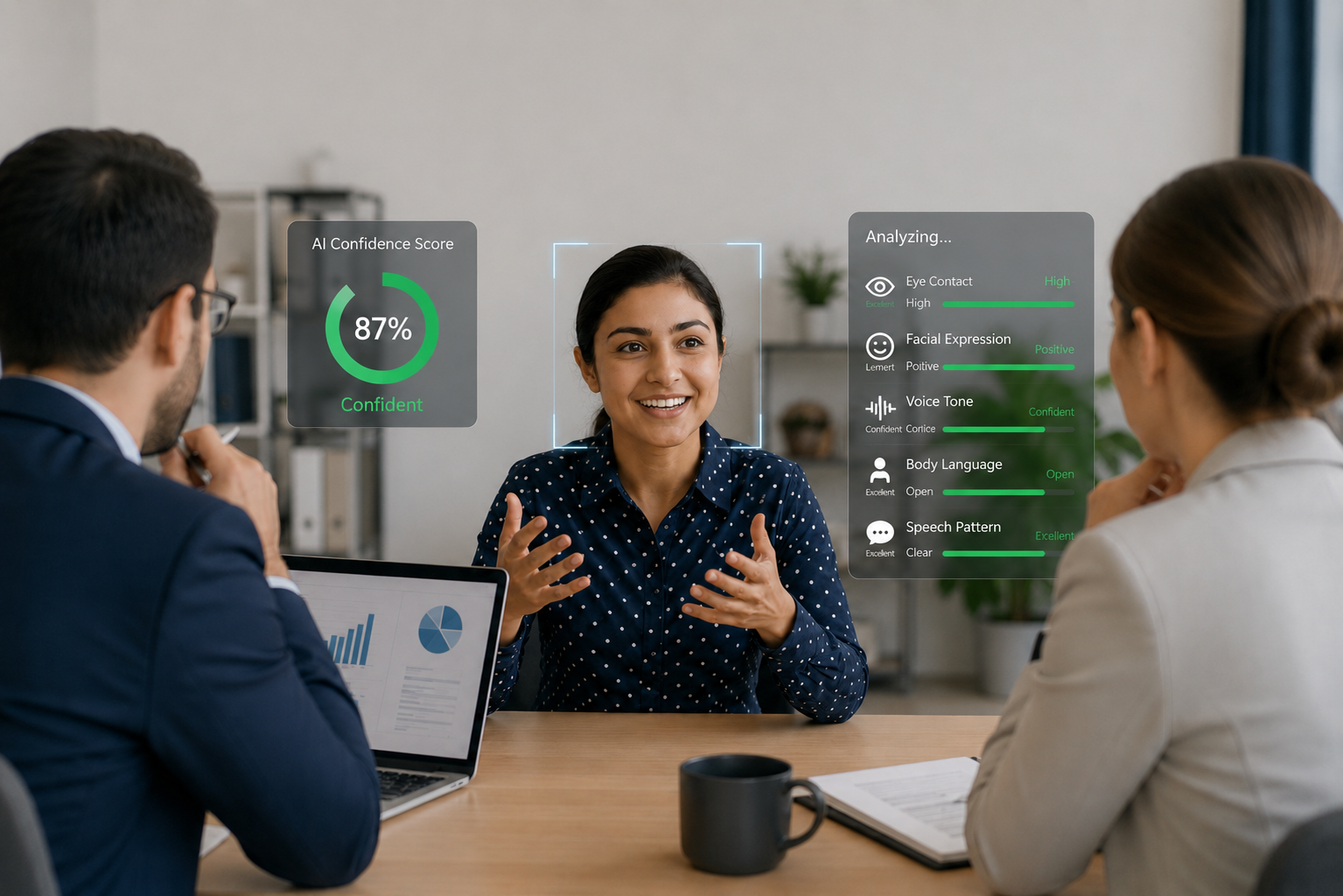
Can AI Detect Confidence in Interviews?
Can AI really detect confidence in interviews? See how voice, face, and language signals are measured, what research shows, and how to build confidence AI will notice.

FAANG Interviews
Learn how to use AI to prepare for FAANG interviews coding, system design & behavioral rounds. A step-by-step AI prep system to land top-tech offers.

30-Day Interview Preparation Plan with AI
Transform your interview prep with a structured 30-day AI study plan. Learn how to use adaptive mock interviews to build skills, fix weak spots, and land the job.